UntreX v1.2 is live — Mood Rooms and faster Timeline loading. See what changed
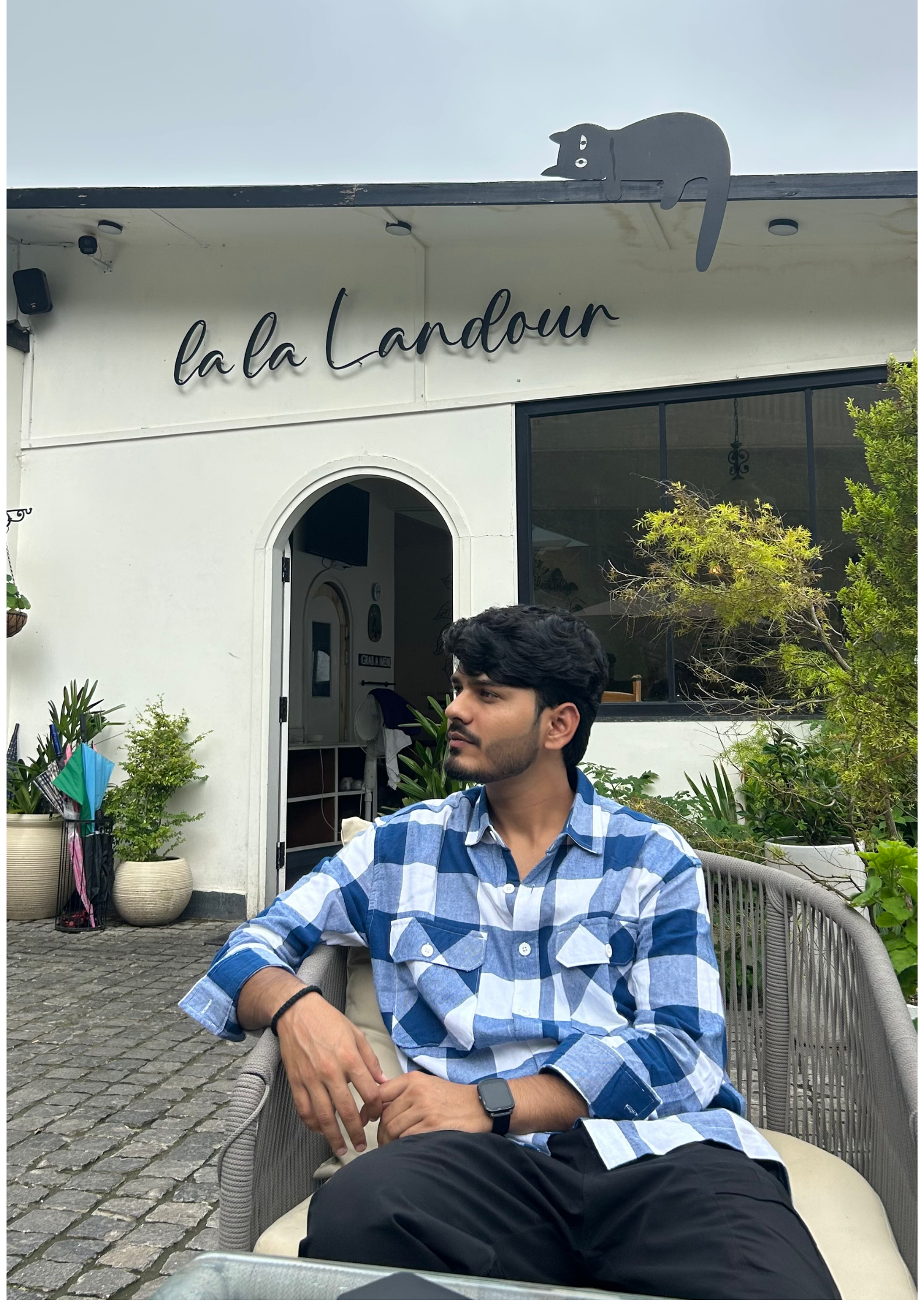
Ayush Singh
Founder & CEO, UntreX
UntreX didn't start in an office. It started in a small room, on a single laptop, in a village in Bihar with no startup network, no investors, and no one to say "let's build this together." Ayush still works across all of it today product strategy, design, engineering, architecture, infrastructure, and privacy because the details are where the philosophy either holds or falls apart: make technology feel calm, reliable, and respectful of the people who use it.
Far away from Silicon Valley
Ayush comes from a small village in Bihar, India — a place with no startup ecosystem, no entrepreneurs to point at and say "that's the path," no investors, no founder network, and no team quietly waiting to build an idea with him. No one taught him how to build something out of nothing. He had to find that out alone, one mistake at a time.
But something in him refused to stay small — a quiet, stubborn need to create something that mattered beyond the four walls he grew up in. When he spoke about big ideas, most people didn't take it seriously. Some laughed. Some doubted quietly. Some didn't even need words — he could see it in their eyes. They had already decided it wasn't possible. He let them think that, and kept going anyway.
"Do you really think you can do this?" Most people's answer always circled back to the same three words: "Just get a job."
There were failures — plenty of them
UntreX was not his first attempt, not even close. Before this, Ayush started businesses that didn't survive, chased ideas that fell apart halfway, and built products and websites that quietly disappeared into nothing. Every failure asked the same question: what now?
There were nights he genuinely wondered if everyone else was right — that the safer path might be the smarter one. Somewhere in the middle of this journey, he also stepped away from engineering, for personal reasons that were his alone to carry — a season of life he had to move through before he could build again. After that, the noise only grew louder: get a job, don't take risks, why think so big. But underneath all of it, one truth stayed unshaken — he didn't just want to survive. He wanted to build.
A room, a laptop, and an unfinished dream
No fancy office. No startup campus. No big team, no investor meetings, no perfect setup waiting to make things easy — just a room, a laptop, and someone still trying to figure it out. Most days he didn't have it figured out. But one thing was never in question: he didn't want to stop.
So he kept learning, kept building, kept failing, and then kept learning again. Money wasn't always easy either — there were stretches where hiring a designer, let alone a team, was far beyond what he could afford. So he became one himself, out of necessity rather than choice: he learned design, development, infrastructure, and product thinking, rebuilding what didn't work until failure stopped feeling like an ending and started feeling like part of the process.
ZyraTech was part of the journey
Somewhere in the middle of it all, Ayush built ZyraTech — his own software company. It became his classroom: building websites, software, and digital products for other people, and learning with every project how an idea actually becomes something real.
But the more he built for others, one truth kept getting louder — he didn't want to spend his whole career building someone else's dream. He wanted to build one of his own. Something that could start in a small village in India, and still belong to the whole world.
Watching the internet, not just using it
At some point, Ayush stopped just using social media and started watching it — what we post, what we hide, what we've quietly turned ourselves into. Online, everything looks flawless: the trips, the achievements, the perfect relationships. Real life often tells a different story. He met people whose lives looked effortless on a screen, then sat across from them in real life and saw something else entirely.
Slowly, the internet turned into a stage — every post a performance, every photo tuned to a single silent test: will this get likes? Somewhere in that pressure, most of us stopped sharing what was actually true — the 2 a.m. thoughts, the quiet fears, the failures no one claps for — and posted a perfect picture instead, as if none of it happened.
More followers, more messages, more connections — and still, so many people feeling completely alone. Sharing a photo with five hundred people can take a second. Sharing one honest thought can feel almost impossible.
We were seeing people. But we weren't understanding them.
What "privacy" actually has to mean
That observation sent Ayush looking for real answers — into privacy, data, algorithms, and AI. What happens to what we share? What gets collected — our clicks, our habits, our preferences — and turned into something we never explicitly agreed to? The deeper he went, the more uncomfortable some of the answers became.
He came to believe privacy isn't just a word on a policy page or a marketing promise. Encryption matters. Security matters. But privacy is also honesty — a user actually knowing what's being collected, why, how it might be used, and how much real control they have over it. He wasn't trying to fear technology — he was trying to understand it. But one question never let go of him: as technology gets more powerful, are we making people more powerful too — or quietly turning them into data points?
Hands-on, on purpose
He leads the product with a hands-on approach across product strategy, design, engineering, infrastructure, privacy, and user experience. Every decision is guided by a single principle — technology should feel calm, reliable, and respectful of the people who use it. That's not a mission statement pulled out for this page; it's closer to a filter he runs every feature through before it ships, including the small ones nobody notices unless they're missing.
Product direction
Defining what UntreX is worth becoming — and having the discipline to leave everything else out.
Design
Shaping experiences around clarity, emotion, and restraint rather than decoration.
Engineering
Working directly across the codebase, from product ideas to the systems that make them real.
Architecture
Thinking beyond individual features and designing foundations that can remain useful as the product grows.
Infrastructure
Building for speed, reliability, and simplicity — the kind of technology users should never have to think about.
Privacy
Treating control over personal moments and information as a product principle, not a settings page.
A place stories don't have to compete to be seen
UntreX exists because sharing a memory shouldn't require giving up privacy. Stories deserve a place where they can live without algorithms deciding who sees them, without engagement metrics defining their value, and without constant pressure to keep scrolling.
That philosophy shapes every part of UntreX — from its privacy-first foundation to its clean, distraction-free experience. The goal isn't to create another social network. It's to create a home for stories that remain personal, timeless, and entirely under the author's control. It's a narrower goal than most startups set for themselves, and that narrowness is intentional — it's easier to protect what a product is for when it isn't trying to be everything at once.
Maybe people didn't need another stage to perform on. Maybe they just needed a place to be human.
Why can't something global start here?
India has talent the world hasn't finished noticing yet — builders, developers, dreamers, people solving hard problems every single day, often with far less than they deserve. Ayush kept asking himself why we should only ever exist on platforms built somewhere else. Why can't something start here — not a copy, not a trend-chaser, but something built around people, stories, and real human experience, made in India for the world. That question stayed with him long enough to become an answer. It became UntreX.
Building UntreX was not easy
An idea is easy. Building it is a different life entirely. No large team, no major funding, no designer, limited money, real pressure, and a vision that, for a long time, only he could see. So he built anyway — learning while building, failing while building, and continuing while building. Bugs, infrastructure issues, database failures, design decisions that took days to get right and seconds to break, deployment problems in the middle of the night, and some nights, just quiet self-doubt with nowhere to go.
He had friends, and people willing to offer advice. But when it came time to actually sit down and build, very few ever said "let's build this together." He didn't have unlimited resources, but the internet gave him something close to it — access. Support from programs like Cloudflare and MongoDB kept him building through the stretches when resources ran thin. Sometimes you don't need everything. You just need one real chance.
Sometimes, the hardest part is continuing to believe in something that no one else can see yet.
Earned slowly, not collected
Ayush believes trust is earned through thoughtful decisions, careful engineering, and long-term commitment — not by collecting more data or chasing short-term trends. His focus remains on creating software that people can confidently return to for years to come. It's a slower way to measure success than a growth chart, and a harder one to fake, which is part of the point.
What he reads and tinkers with
Outside of UntreX, his interests include software architecture, distributed systems, machine learning, and designing products that balance simplicity with depth — the kind of interests that tend to show up quietly in the product itself, in decisions about how something is built long before anyone can see it.
- Software architecture
- Distributed systems
- Machine learning
- Full-stack engineering
- Product design and user experience
- Systems that make complex things feel simple
To a room, to a laptop, to UntreX
Ayush doesn't know how far this journey goes, how big UntreX will become, or whether the world understands the vision today. But he's heard "you can't" enough times to fill a lifetime, felt doubt settle in more nights than he can count, and been broken by this journey more than once — and still doesn't need everyone to believe in him. He just needs to keep building.
I never want to sit somewhere years from now and ask myself, "what if I had tried?" Because I did try. And I kept building.
See what that philosophy looks like, built.
Start your first story — it's private from the moment you write it.
Get Started